

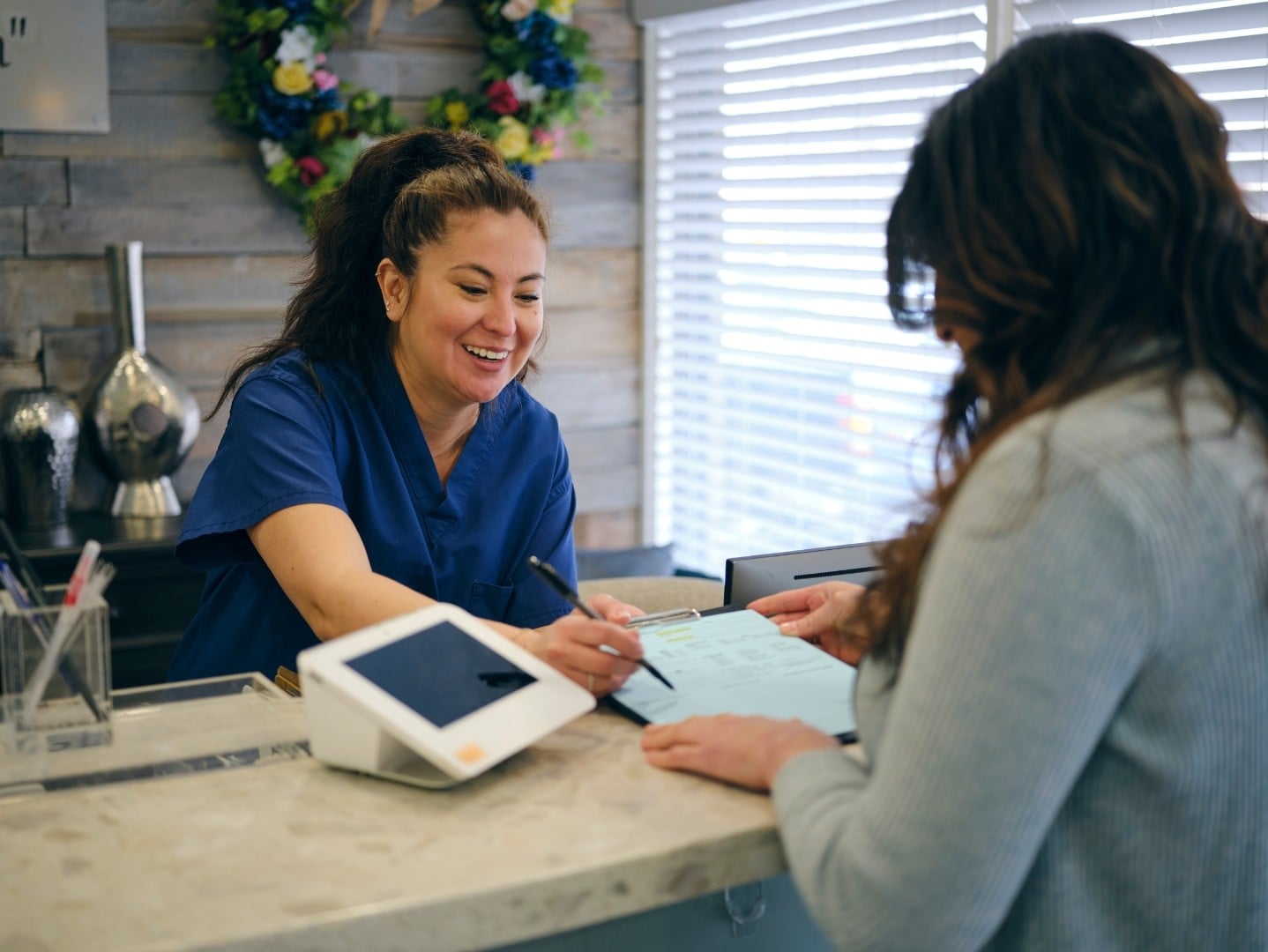
32% of inbound calls to dental practices go unanswered during business hours. Not because practices don’t care, but because they’re busy with patients, and phones are ringing off the hook.
Here’s what that adds up to: if your practice takes 30 calls per day and 32% go unanswered, that’s roughly 10 missed calls daily. And 97% of those callers will never call back. What looked like a minor scheduling gap is actually a permanent loss.
This article breaks down why calls are missed, what the real cost is, and what actually works to fix it without hiring more staff.
Why Calls Are Missed
Your front desk is answering a call when another patient walks in. Your team is prepping a patient for a procedure. Your dentist is between appointments. The phones ring. And ring. And ring.
By the time someone picks up, the caller has already hung up and dialed a competitor.
The reasons are predictable:
Reason 1: Front Desk Staff Are Multitasking Front desk staff aren’t just answering phones. They’re checking patients in, explaining insurance, scheduling follow-ups, processing payments. When a patient is sitting in your waiting room, that phone call doesn’t feel urgent. It loses priority.
Reason 2: Peak Call Times Overwhelm Small Teams Most dental practices get a surge of calls between 8–9am and 4–5pm. A single receptionist can’t handle 15+ calls simultaneously. Some calls go to voicemail. Some callers get tired of waiting on hold and hang up.
Reason 3: No Overflow System When your one receptionist is on a call, there’s no one to pick up the next line. Small practices don’t have backup coverage. Calls drop.
The Revenue Impact
Let’s put 32% in context. If your practice takes 30 calls per day:
- 10 go unanswered
- 97% of those callers hit voicemail and never call back
- That’s roughly 9–10 patients per day who tried to reach you and won’t try again
The average dental practice carries $2.4M in unscheduled treatment. Patients who wanted to call but couldn’t reach you aren’t adding to that pipeline. They’re leaving it behind.
With 56% of dental patients already overdue for their cleaning, every missed call is almost certainly an overdue patient who needed a push and didn’t get one.
Why 97% Don’t Call Back After Voicemail
You might think: “They’ll call back.” They won’t.
97% of patients who reach voicemail never call back. They were motivated to call right then, and by the time they heard “please leave a message,” their brain switched to passive mode. They moved on.
This is why missed calls are worse than they look. It’s not just missing the call, it’s missing the only realistic chance to convert that patient.
What Actually Works to Fix It
There are two paths: increase your in-house capacity or outsource call answering.
Path 1: Hire Another Receptionist Hire a second person dedicated to calls. The all-in national average, salary, taxes, and benefits combined, runs approximately $3,840/month. Training takes 20–40 hours. Ramp-up to full productivity takes 2–3 months.
Risk: front desk turnover is approximately 29% nationally. You’ll likely replace this person within 2–3 years.
Path 2: Remote Receptionist A dedicated virtual receptionist is available during your peak hours, trained in your PMS and scheduling system, and not multitasking with in-office duties.
Cost: $1,995/month. No hiring process. No training burden on your current team. Average VA tenure at Reach is 4 years, which means no constant replacement cycle.
The ROI Is Immediate
The cost comparison alone makes the case. A full-time Reach VA at $1,995/month versus $3,840/month all-in for an in-house hire is nearly $23,000 back in the practice’s pocket every year, before you count a single recovered call.
One multi-location dental group in Texas added Reach VAs to handle phones and scheduling. Daily patient volume increased by more than 20%. Their schedule stayed above 90% full. Administrative staffing costs dropped by more than $80,000 per year.
FAQ
Q: Do I really need a dedicated person just for phones? A: Not necessarily, but if you’re missing 32% of calls, yes. Someone needs to answer them. If your team is too busy, that someone can’t be your current staff.
Q: What if I get a better phone system? A: Phone systems help, but they don’t close appointments. An auto-attendant that says “press 1 for scheduling” isn’t a human voice. 97% of voicemail callers never call back, regardless of how polished the system sounds.
Q: How do I know if I’m missing calls? A: Check your phone records. Most modern systems track missed calls and voicemail transcripts. If you have 5+ missed calls per day, you have a problem worth solving.
If you’re missing calls, the fix is straightforward. Book a call to see how a dedicated receptionist would handle your call flow. No pitch, just a conversation about your specific situation.